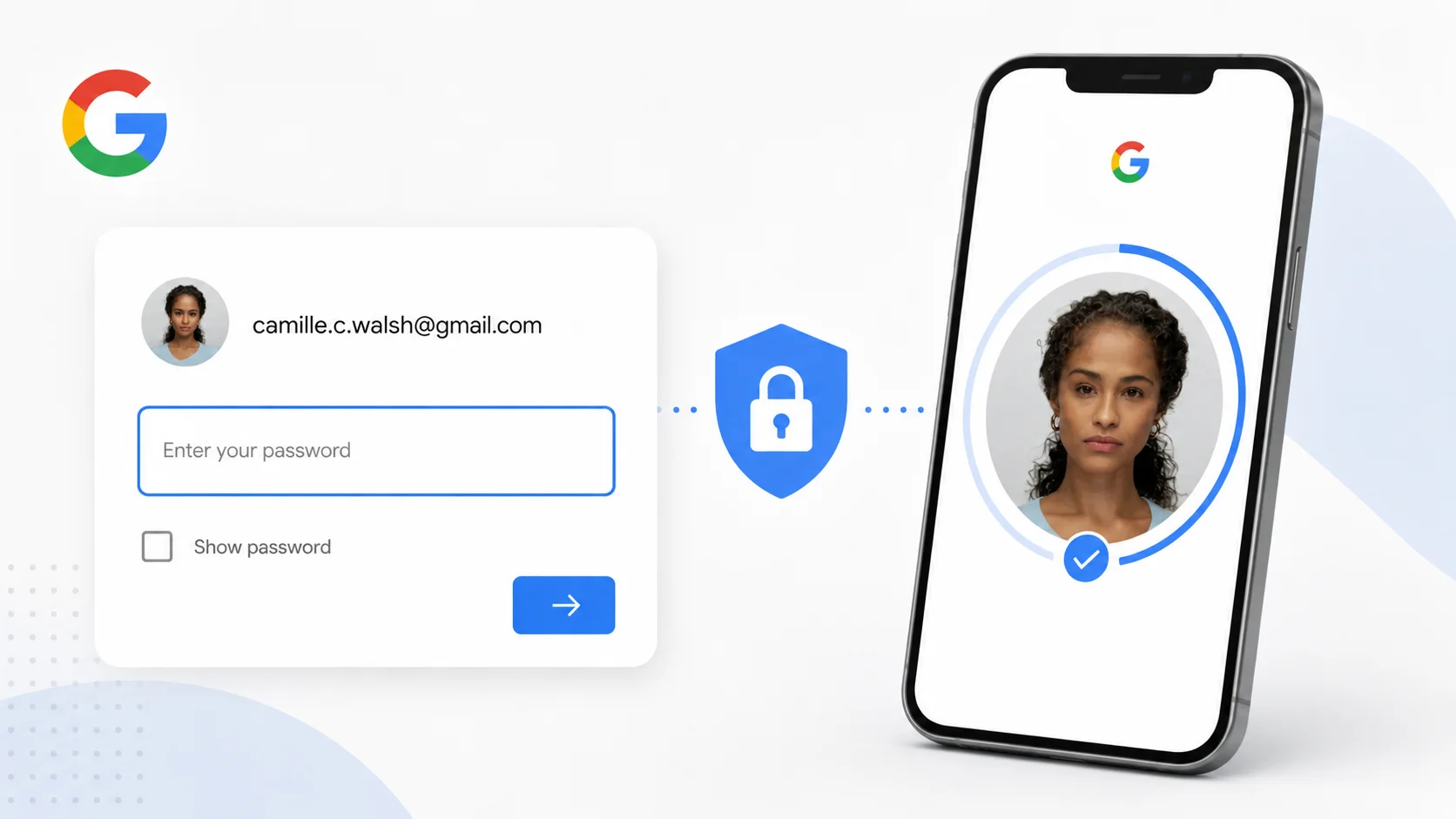
Google has introduced a new identity verification feature called “selfie video” designed to help users regain access to locked accounts, marking a significant step in account recovery and authentication security.
The feature aims to provide an additional sign-in method, especially useful when users lose access to their primary authentication devices.
Announced by John Gronberg, Director of Product Management, and Claire Forszt, Product Manager for Google Identity and Engagement, the feature strengthens account recovery workflows while maintaining a strong focus on privacy and user control.
Google accounts often contain highly sensitive data, including emails, documents, and personal media. Losing access to such accounts can lead to operational disruptions and potential security risks.
The newly introduced selfie video feature offers an alternative recovery path when traditional methods such as two-factor authentication (2FA), recovery emails, or trusted devices are unavailable.
The feature enables users to record a short video of themselves, which is then used as a biometric reference for future identity verification. During account recovery, users can submit a new selfie video, which Google compares against the stored version to confirm identity.
How the Selfie Video Feature Works
The setup process is designed to be simple and user-friendly:
- Users access the selfie video setup via their Google Account settings.
- The system guides them through recording a short video with specific head movements to capture multiple facial angles.
- The recorded video is securely stored and linked to the user’s account.
When attempting to recover access:
- Users record a new selfie video.
- Google’s system performs a comparison with the original video.
- If the match is successful, access to the account is restored.
This method leverages biometric verification techniques similar to facial recognition but incorporates motion-based validation to reduce spoofing risks.
Security and Privacy Considerations
Google emphasizes that the selfie video feature is built with privacy and security at its core. According to the company:
- The video is recorded and stored only with explicit user consent.
- Data is encrypted at rest, ensuring protection even when not actively used.
- The video is used strictly for authentication purposes unless users opt in for additional uses.
- Users retain full control and can delete their selfie video at any time.
From a cybersecurity perspective, this approach reduces reliance on static credentials, which are more vulnerable to phishing and credential-stuffing attacks. However, it also introduces new considerations around biometric data protection and potential abuse scenarios if device-level security is compromised.
The introduction of video-based authentication signals a broader shift toward adaptive and multi-factor identity verification systems. While traditional MFA methods remain effective, attackers increasingly target recovery workflows as a weak link.
By adding a biometric layer that requires real-time interaction, Google aims to:
- Mitigate account takeover (ATO) attacks.
- Reduce dependency on SMS-based authentication, which is susceptible to SIM swapping.
- Strengthen defenses against social engineering attacks targeting recovery channels.
However, security researchers may closely monitor the feature for potential bypass techniques, such as deepfake-based spoofing or replay attacks, particularly as generative AI capabilities continue to evolve.
The selfie video feature is being rolled out as an optional sign-in and recovery method. Google continues to recommend enabling multiple authentication factors, including security keys and authenticator apps, to ensure layered protection.
Users can configure the feature through their Google Account settings and access official guidance via Google’s support documentation.
As identity systems evolve, the introduction of biometric recovery mechanisms like selfie video reflects the industry’s ongoing effort to balance usability with robust security controls.