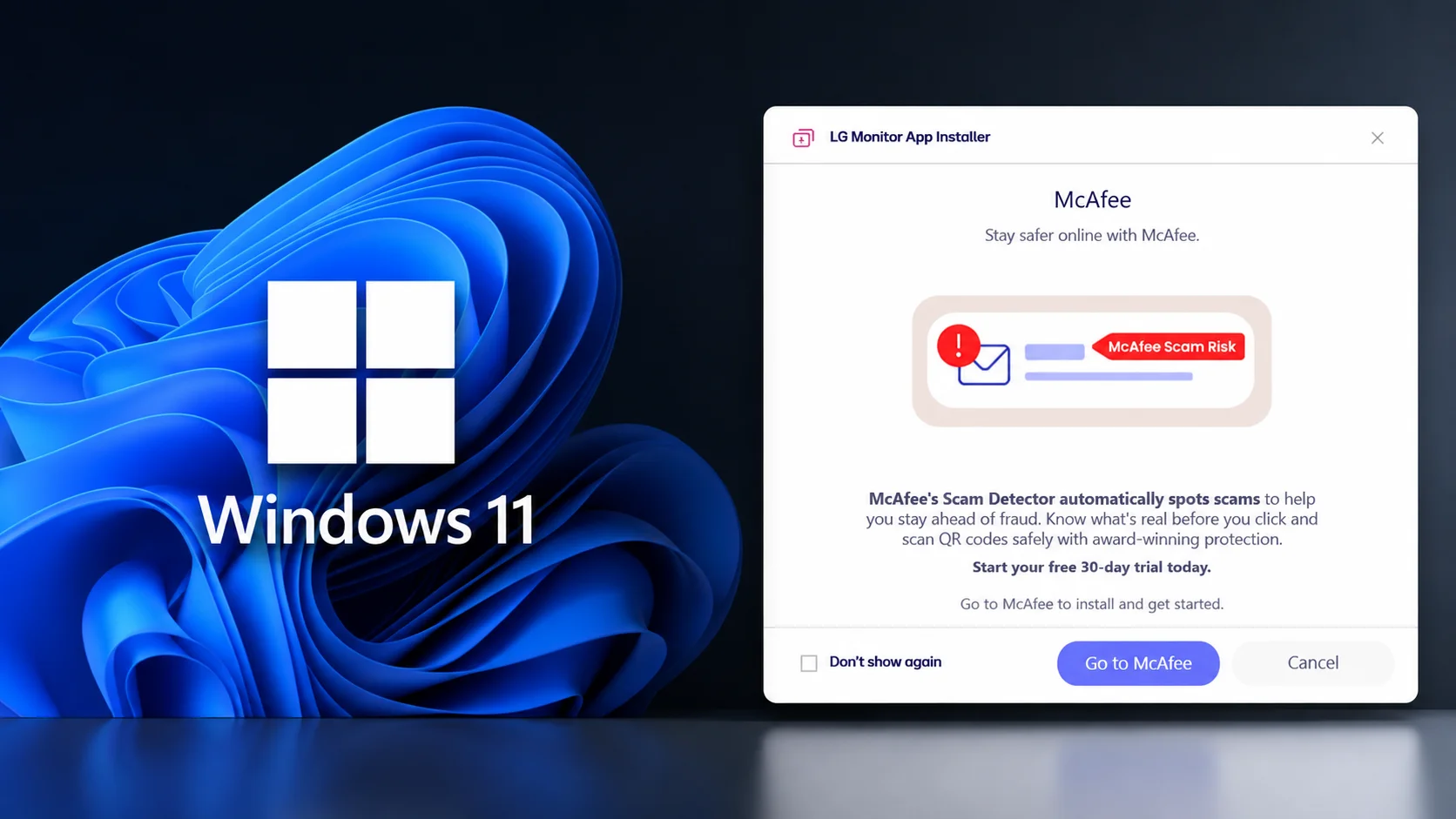
Microsoft has moved quickly to shut down unwanted antivirus advertising after users discovered that connecting an LG monitor could silently install companion software and trigger a McAfee trial pop-up on Windows 11.
The issue surfaced when owners of premium LG displays reported that plugging in their monitors caused Windows Update to deliver the LG Monitor App Installer.
Once installed via the Microsoft Store path, the app later surfaced a McAfee trial promotion an unexpected ad experience on machines that had never requested antivirus software.
For many users, the problem was straightforward: a monitor that can cost around $1,200 should not become a delivery vehicle for third-party security ads.
The companion app had no legitimate reason to push commercial antivirus offers through an OS-driven install path, and the behavior quickly drew criticism across social media and tech communities.
How the Complaint Reached Microsoft
The situation escalated after Epic Games CEO Tim Sweeney publicly tagged Windows chief Pavan Davuluri on X (formerly Twitter). The spotlight forced a fast response from Microsoft’s Windows leadership.
Within days, Davuluri posted an official update:
The episode highlights a long-running tension in the Windows ecosystem: OEM and peripheral companion apps that arrive through Windows Update or the Microsoft Store can still introduce unwanted prompts, trialware, and advertising. Even when the core OS remains clean, partner software can undermine the user experience.
Microsoft’s public statement is notable for two reasons:
- It explicitly frames bloatware-style ads as incompatible with the Windows 11 experience Microsoft wants to deliver.
- It shows the company willing to pressure an ecosystem partner, in this case LG, to remove the offending behavior rather than leave the complaint unanswered.
LG’s agreement to disable the McAfee pop-up is described as an immediate step. Broader changes to how the LG Monitor App is distributed or what permissions it requests may still follow, but the ad surface is being closed first.
What Users Should Know Right Now
- Connecting certain LG monitors can still trigger the LG Monitor App Installer via Windows Update.
- The McAfee trial pop-up is being disabled at the app level following Microsoft’s intervention.
- Users who already installed the app can check for updates in the Microsoft Store or remove the software if they do not need LG’s monitor controls.
- The incident reinforces that peripheral drivers and companion apps remain a common vector for unwanted software on Windows 11.
Major Windows complaints often fade without a clear resolution. This one did not. Microsoft listened, contacted LG, and secured a concrete fix in a matter of days.
The outcome sends a signal to other hardware partners: silent installs and third-party ad pop-ups will face scrutiny when they damage the shared customer experience.
For Windows 11 users, the message from Redmond is now explicit: there is no place for this class of bloatware advertising, and Microsoft is prepared to act when partners cross the line.