.webp?w=1068&resize=1068,580&ssl=1 "Best Digital Risk Protection (DRP) Platforms")
Businesses face unprecedented digital risks in 2026 as cyber threats evolve beyond traditional perimeters.
Digital Risk Protection (DRP) platforms deliver proactive visibility into brand impersonation, data leaks, phishing campaigns, and cybercrime targeting reputation, customers, and IP.
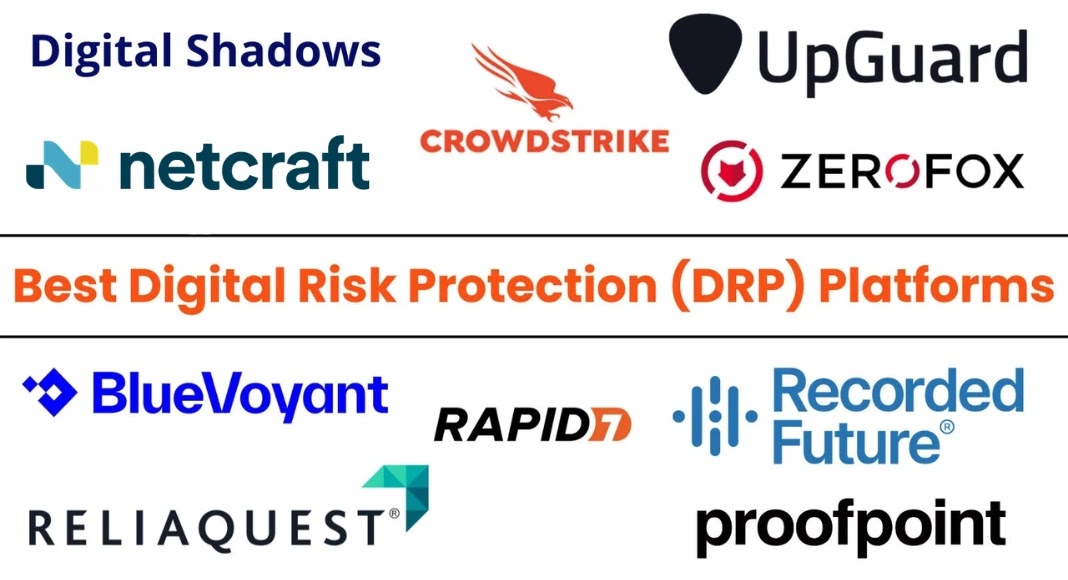
Our Top 10 Best DRP Platforms for 2026 break down specifications, features, reasons to buy, pros/cons, and ideal use cases.
This SEO-optimized guide helps security leaders select the perfect DRP solution for comprehensive external threat defense.
Why Best Digital Risk Protection (DRP) Platforms 2026
The rise of hybrid work, cloud computing, and AI-driven cyberattacks has significantly expanded the attack surface for businesses in 2026.
Gartner and other industry leaders emphasize the adoption of DRP solutions as a critical component of enterprise cybersecurity strategies.
These platforms provide protection against external risks that traditional firewalls and endpoint solutions cannot capture such as credential leaks on dark web forums or phishing domains impersonating your brand.
Selecting the right DRP platform requires careful evaluation of features, such as contextualized threat intelligence, takedown capabilities, global threat databases, automation, and integration with existing SOC workflows.
This article simplifies the process by showcasing the top 10 DRP tools in 2026, their unique strengths, and how they stand out in the competitive cybersecurity landscape.
Comparison Table: Top 10 Digital Risk Protection Platforms 2026
| Tool Name | Threat Intelligence | Brand Protection | Dark Web Monitoring | Takedown Service | Automated Alerts |
|---|---|---|---|---|---|
| Digital Shadows | ✅ Yes | ✅ Yes | ✅ Yes | ✅ Yes | ✅ Yes |
| ReliaQuest | ✅ Yes | ✅ Yes | ✅ Yes | ❌ No | ✅ Yes |
| Proofpoint | ✅ Yes | ✅ Yes | ✅ Yes | ✅ Yes | ✅ Yes |
| UpGuard BreachSight | ✅ Yes | ✅ Yes | ✅ Yes | ❌ No | ✅ Yes |
| Netcraft | ✅ Yes | ✅ Yes | ✅ Yes | ✅ Yes | ✅ Yes |
| Rapid7 | ✅ Yes | ✅ Yes | ✅ Yes | ❌ No | ✅ Yes |
| ZeroFox | ✅ Yes | ✅ Yes | ✅ Yes | ✅ Yes | ✅ Yes |
| CrowdStrike Falcon | ✅ Yes | ✅ Yes | ✅ Yes | ✅ Yes | ✅ Yes |
| Recorded Future | ✅ Yes | ✅ Yes | ✅ Yes | ❌ No | ✅ Yes |
| BlueVoyant | ✅ Yes | ✅ Yes | ✅ Yes | ✅ Yes | ✅ Yes |
1. Digital Shadows
Why We Picked It
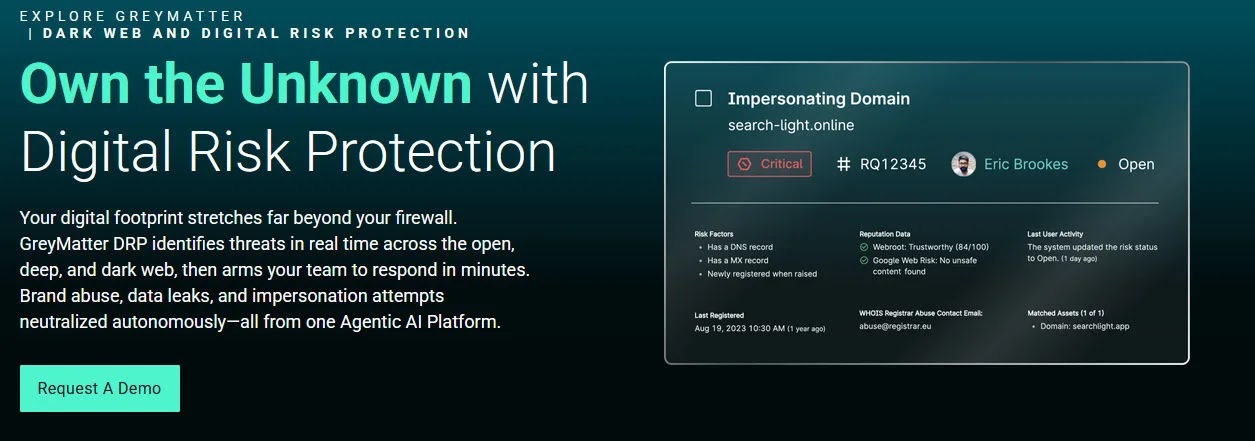
Digital Shadows SearchLight is one of the most recognized DRP platforms that continuously monitors organizational risks across the open, deep, and dark web.
Companies face massive challenges due to leaked credentials, phishing attacks, and impersonation domains.
SearchLight helps reduce detection and response time by providing contextualized reporting, enriched threat intelligence, and automated takedown services.
We picked Digital Shadows because it offers one of the most extensive data collections, covering millions of sources globally.
Specifications
Digital Shadows SearchLight delivers exceptional visibility by combining advanced threat intelligence with contextual alerts. It enables enterprises to discover data breaches, domain impersonations, and compromised accounts before they escalate.
Leveraging automation significantly reduces the workload on SOC teams, while swift takedown capabilities ensure phishing websites are removed quickly.
Features
SearchLight includes a wide range of features such as stolen credential detection, data breach monitoring, dark web exploration, incident prioritization, and phishing domain takedowns.
It deploys machine learning models to filter irrelevant findings and deliver actionable intelligence. Organizations benefit from precise threat categorization and extended intelligence coverage across both structured and unstructured sources.
Reason to Buy
If your business is heavily targeted by cybercriminals or handles sensitive customer data, Digital Shadows SearchLight offers the right balance of coverage and automation.
The efficiency with which it uncovers external risks ensures businesses can avoid reputational harm and regulatory penalties. Its emphasis on speed, accuracy, and timely remediation distinguishes it from other platforms.
Pros
- Comprehensive dark web monitoring
- Automated phishing site takedowns
- Simple integration with SOC tools
- Actionable and contextual alerts
Cons
- Designed mainly for large organizations
- Slightly higher cost compared to alternatives
✅ Best For: Enterprises that demand deep visibility into external threats with automated remediation capabilities.
🔗 Try Digital Shadows SearchLight here → Digital Shadows SearchLight Official Website2. ReliaQuest

Why We Picked It
ReliaQuest is a rising leader in DRP, known for its emphasis on unifying detection across both internal and external threat environments.
Its platform gives organizations unmatched control by blending digital risk protection with SIEM and SOAR integrations.
We selected ReliaQuest because it addresses a key market need: consolidating multiple threat intelligence feeds into a single platform.
The tool delivers enhanced analyst productivity by reducing alert fatigue. In 2026, when enterprises face budget constraints but need greater security outcomes, ReliaQuest provides cost-efficiency without sacrificing threat visibility.
Specifications
ReliaQuest DRP integrates with threat intelligence sources, business applications, and SOC systems to deliver continuous discovery and response. The platform tracks risks such as leaked credentials, malicious domains, and brand impersonation.
With an intuitive dashboard, it empowers security teams to optimize response strategies. Its key strength lies in correlating external threats with internal incidents, enabling more effective decision-making.
Features
ReliaQuest offers domain impersonation identification, data leakage detections, actionable alerts, and advanced risk scoring.
It allows automated workflows, particularly beneficial for businesses handling complex environments. In addition, flexible integration options allow seamless workflows with security orchestration tools, ensuring faster remediation.
Reason to Buy
The ability to identify external digital risks and simultaneously tie them back to internal response practices makes ReliaQuest unique.
This dual focus on external and internal threats reduces duplication of efforts and ensures efficient use of cybersecurity budgets.
Pros
- Strong SIEM/SOAR integration
- Simplified analyst workflows
- Cost-effective DRP solution
- Unified threat correlation
Cons
- Fewer takedown services compared to others
- Learning curve for advanced features
✅ Best For: Enterprises seeking consolidated visibility across their security operations with external risk protection.
🔗 Try ReliaQuest Digital Risk Protection here → ReliaQuest Digital Risk Protection Official Website3. Proofpoint
Why We Picked It
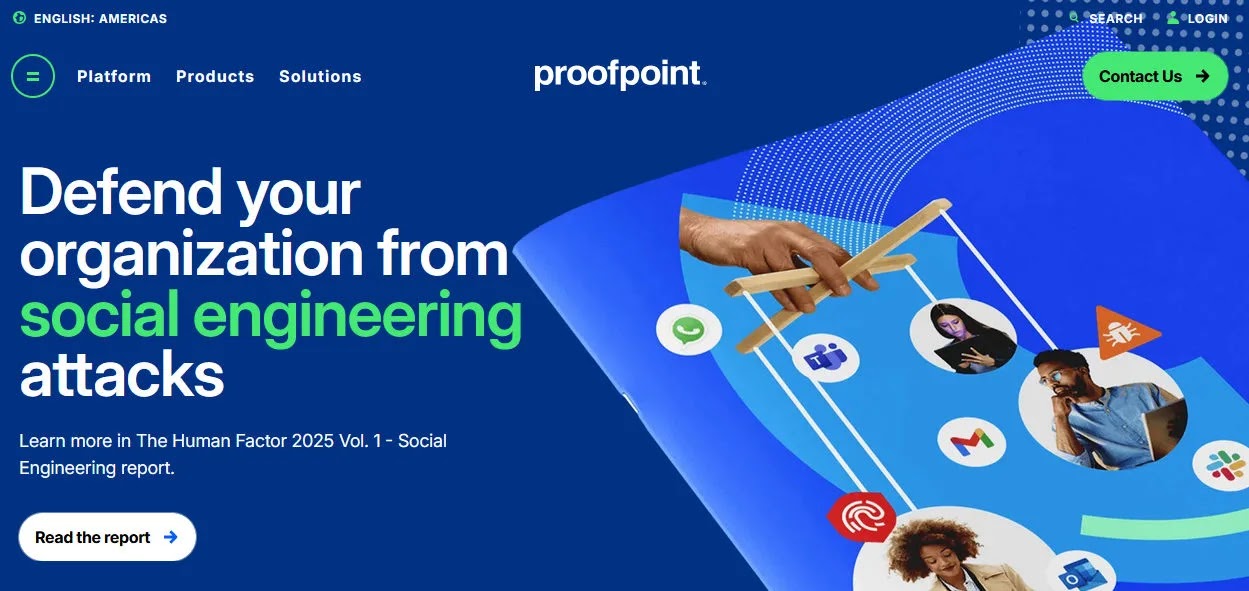
Proofpoint is widely known for its dominance in email security, but its digital risk protection platform takes defense a step further.
We picked Proofpoint because of its strength in identifying and mitigating threats tied to phishing and account takeover attacks.
In 2026, phishing scams continue to be a top driver of data breaches across industries, making Proofpoint’s capabilities critical. Another reason is its unmatched takedown services backed by global expertise.
Proofpoint’s tight integration with email security provides a multi-dimensional defense, allowing companies to protect users, brands, and assets simultaneously.
Specifications
Proofpoint DRP specializes in detecting phishing campaigns, malicious domains, and fraudulent social media accounts impersonating brands.
It leverages advanced threat intelligence networks, ensuring timely alerts and remediation strategies. Its comprehensive visibility covers open sources, dark web forums, and suspicious domains registered globally.
Features
Proofpoint DRP comes with takedown capabilities, detailed impersonation monitoring, fake social media account identification, and phishing domain detection.
It extends its coverage to mobile app store impersonations, making it especially valuable for consumer-focused brands.
Reason to Buy
For businesses that consider phishing attacks as their top threat, Proofpoint delivers unmatched expertise.
It enables organizations to swiftly identify and disrupt ongoing campaigns while ensuring brand integrity remains intact.
Pros
- Strong phishing detection capabilities
- Global takedown expertise
- Integration with Proofpoint’s email defense
- Comprehensive social media monitoring
Cons
- Premium pricing for advanced packages
- Heavier focus on phishing may limit versatility
✅ Best For: Companies targeted by phishing and impersonation attacks on multiple channels.
🔗 Try Proofpoint Digital Risk Protection here → Proofpoint Digital Risk Protection Official Website4. UpGuard
Why We Picked It
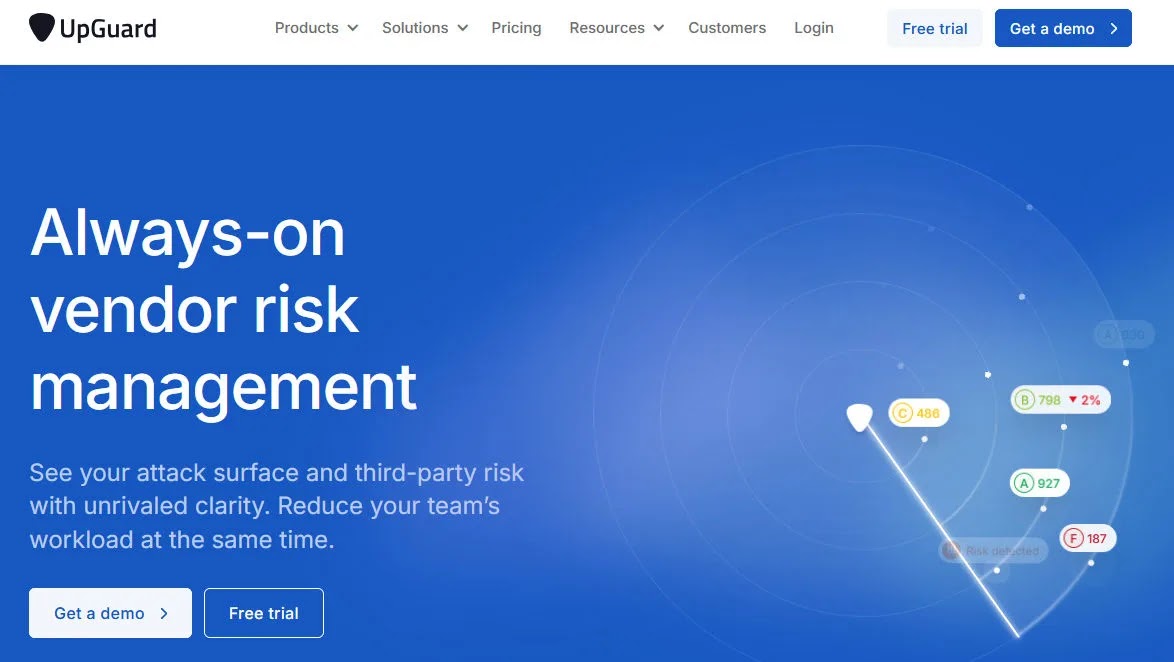
UpGuard BreachSight has emerged as one of the best DRP platforms for businesses looking for continuous monitoring over their digital footprint.
We picked it because of its focus on external attack surface management combined with its ability to detect exposed data and leaked credentials rapidly.
In 2026, data leaks are one of the most frequent causes of breaches, and having a tool like UpGuard helps businesses detect vulnerabilities before criminals exploit them.
Another noteworthy reason is its user-friendly UI, which makes cyber risk insights accessible even for non-technical teams.
With its powerful automation, easily scalable engine, and actionable insights, UpGuard stands out in protecting reputations and minimizing the risks of breaches.
Specifications
UpGuard BreachSight focuses on identifying data leaks, misconfigurations, and reputational threats across the surface, deep, and dark web.
It emphasizes automated external attack surface management, enabling companies to visualize their vulnerabilities effectively.
Features
UpGuard’s features include real-time exposure monitoring, leaked credential discovery, risk scoring, third-party risk management integrations, and alert systems for compromised domains or accounts.
It leverages automation to cut analysis time while offering human-aided validation options for precise reporting.
Reason to Buy
Organizations that value ease of use and rapid time-to-value should consider BreachSight. Its powerful risk scoring and automation allow teams to stay ahead of breaches while making vendor and internal monitoring smooth.
Pros
- Easy to implement and use
- Strong vendor risk management capabilities
- Focus on data exposure and breach detection
- Automated monitoring with real-time alerts
Cons
- Limited takedown services compared to competitors
- Might lack advanced SOC integration features
✅ Best For: Organizations and SMBs needing user-friendly breach detection combined with vendor risk visibility.
🔗 Try UpGuard BreachSight here → UpGuard BreachSight Official Website5. Netcraft
Why We Picked It
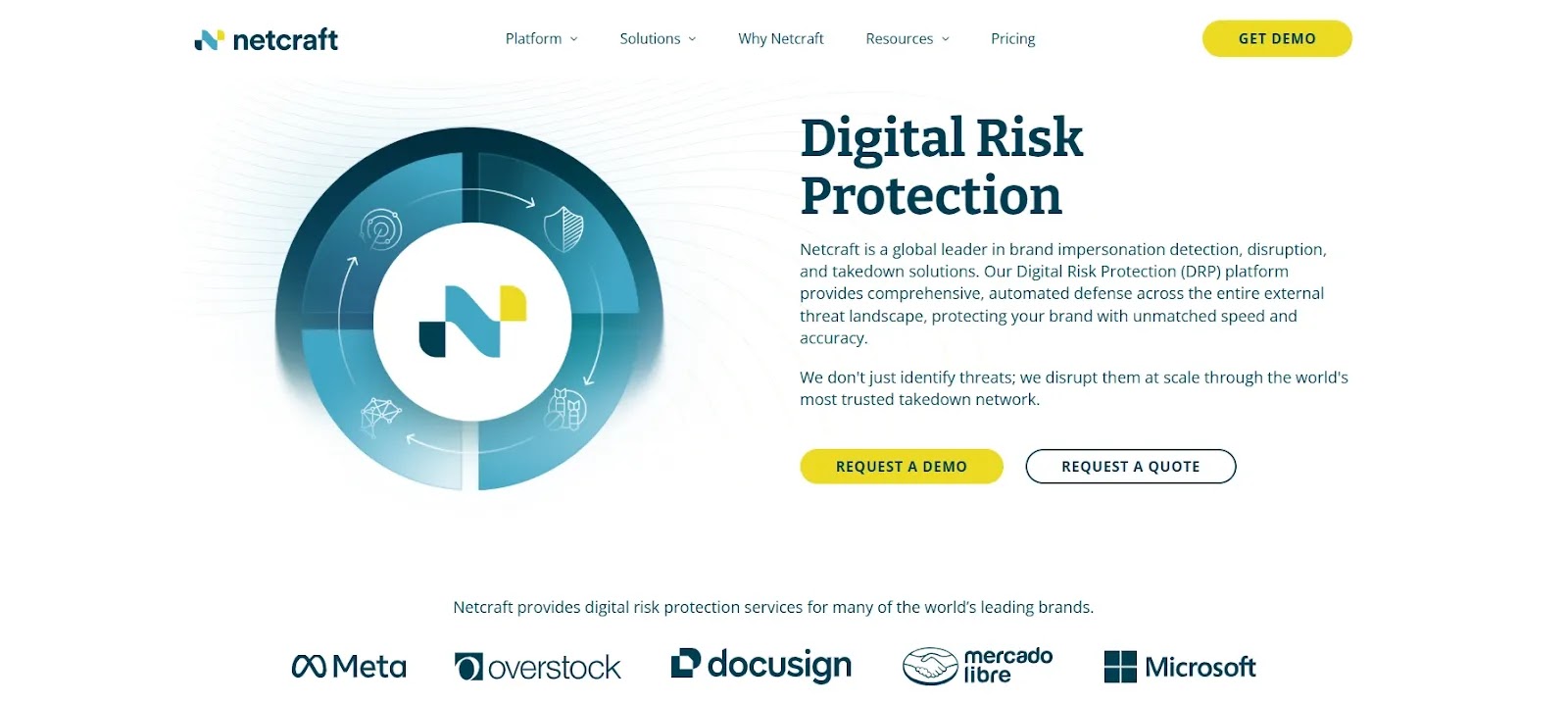
Netcraft earned a place on this list because it focuses on the metric that matters most in phishing and online fraud: how long the attack remains available to potential victims.
The platform covers the full response process. It finds suspicious assets, verifies whether they are malicious, gathers the evidence needed for enforcement, deploys countermeasures, and manages the phishing takedown.
This is useful for security teams that do not want another source of alerts they must investigate and resolve themselves.
Netcraft reports takedown speeds under 33 minutes for phishing and monitors more than 100 attack types across domains, websites, social media, mobile apps, advertisements, scams, and deep and dark web sources.
Specifications
- Platform type: Digital risk protection and threat takedown
- Primary strengths: Phishing, impersonation, fraud, and brand abuse
- Monitoring: Continuous external threat discovery
- Response: Validation, blocking, takedown, and continued monitoring
- Threat coverage: More than 100 attack types
- Median phishing takedown: Under 33 minutes
- Pricing: Custom quote
Features
Netcraft detects fraudulent websites and domains, social media impersonation, fake mobile apps, malicious advertisements, scams, and threats on the deep and dark web.
Its domain intelligence can identify suspicious infrastructure before a phishing site becomes active.
When there is sufficient evidence that a domain is intended for malicious use, Netcraft can pursue pre-emptive disruption rather than waiting for customers to be targeted by a live attack.
The platform presents the evidence behind each case (including screenshots, attack classifications, infrastructure information, and takedown progress) without making users piece the story together across multiple tools.
The interface is clean and straightforward, allowing security, fraud, and brand teams to quickly understand what was found, why it matters, and what action Netcraft is taking.
Reporting dashboards give teams a clear view of threat trends, response times, takedown outcomes, and recurring sources of risk.
This makes the platform useful not only for analysts handling individual cases, but also for leaders who need to demonstrate how the program is reducing exposure over time.
The service also keeps watching after an attack has been removed, which helps identify sites that return, move to new infrastructure, or reappear under another domain.
Reason to Buy
Netcraft is a good fit for organizations that already know phishing and impersonation are affecting their customers but are struggling to respond quickly enough.
Its main advantage is the link between detection and action. Rather than passing an alert to the customer, Netcraft manages the work required to disrupt and remove the threat.
This can reduce both customer exposure and the amount of time internal teams spend submitting reports and following up with providers.
Pros
- Fast, managed phishing takedowns
- Strong domain and website impersonation detection
- Evidence and provider communications available in one platform
- Protection across multiple customer-facing attack channels
- Combines automation with analyst oversight
- Continued monitoring for recurring attacks
Cons
- Built primarily for enterprise-scale threat volumes
- Pricing requires speaking with the vendor
- Organizations looking mainly for third-party risk management may need a different platform
Best For: Banks, retailers, technology companies, government agencies, and other customer-facing organizations where phishing or impersonation can quickly lead to fraud and reputational damage.
Book a personalized demo of Netcraft Digital Risk Protection here → Netcraft Demo Request Form
Try Netcraft here → Netcraft Official Website
6. Rapid7
Why We Picked It
Rapid7 is widely known for its vulnerability management tools, but Threat Command adds a vital external risk protection layer.
We picked Threat Command because it provides deep coverage of underground forums and social media environments.
In 2025, where credential theft and underground chatter act as precursors to significant attacks, Rapid7 provides critical visibility.
For companies already invested in Rapid7 solutions, this creates a solid ecosystem with both internal and external protection.
Specifications
Threat Command offers protection by correlating intelligence from the deep web, dark web, social media, and malicious domains.
It also complements forensics investigations by enriching logs with proactive intelligence. Its streamlined dashboard makes it easy to prioritize urgent risks affecting enterprises.
Features
The platform includes domain and brand monitoring, credential leakage alerts, dark web scanning, tailored risk analysis, and SOC-compatible integrations.
Automated workflows allow faster alert response rules for operational efficiency.
Reason to Buy
Rapid7’s Threat Command is highly suitable for companies using its vulnerability management solutions, offering a seamless consolidated approach to cyber defense.
Pros
- Strong dark web coverage
- Simple integration with Rapid7 ecosystem
- Easy-to-use interface for SOC analysts
- Great for comprehensive threat intelligence users
Cons
- Limited takedown services compared to leaders
- Focuses heavily on integration within Rapid7 users
Best For: Companies seeking synergy with Rapid7 security solutions paired with expanded DRP visibility.
Try Rapid7 Threat Command here → Rapid7 Threat Command Official Website7. ZeroFox

Why We Picked It
ZeroFox is a well-known name in digital risk protection, with a significant focus on social media, domain, and dark web risk mitigation.
We picked ZeroFox because of its high coverage in protecting brands from impersonation, particularly online. In 2025, social engineering and fake social accounts remain one of the fastest-growing attack vectors exactly where ZeroFox excels.
It combines automated takedowns, intelligence feeds, and robust monitoring to reduce digital exposure effectively. The platform also delivers scalable solutions suitable for organizations of all sizes, making it flexible and highly adoptable.
Specifications
ZeroFox offers intelligence across public platforms, domain registries, and underground forums.
It delivers brand protection through domain spoof takedowns, breach discovery, and malicious content disruption, making it ideal for marketing and customer-facing enterprises.
Features
Its key features include real-time alerting, fake account identification, malicious domain removals, phishing campaign disruption, and SaaS-based deployment flexibility.
It also includes automation for large-scale monitoring of social media impersonations.
Reason to Buy
If brand and social media risks are your highest concern, ZeroFox ensures your organization maintains credibility and customer trust. Its rapid takedown services safeguard reputational equity.
Pros
- Strong brand impersonation defense
- Automated phishing and domain removals
- User-friendly SaaS solution
- Wide coverage for social platforms
Cons
- Less focused on advanced intelligence analysis
- Premium add-ons may increase costs
Best For: Businesses highly exposed to social engineering risks and brand impersonation.
Try ZeroFox here → ZeroFox Official Website8. CrowdStrike
Why We Picked It
CrowdStrike Falcon Intelligence integrates seamlessly within CrowdStrike’s ecosystem, making it a preferred choice for organizations already relying on Falcon for endpoint security.
We picked it because it brings together endpoint visibility and external digital risk protection in one unified solution.
As enterprises increasingly seek consolidation, Falcon Intelligence offers both effectiveness and cost savings.
Its strong adaptive AI ensures precision by correlating external intelligence with endpoint activity. Falcon Intelligence also excels in speeding up responses to ransomware, phishing, or credential theft campaigns.
Specifications
CrowdStrike Falcon Intelligence collects threat data across the digital ecosystem, analyzes it using AI-driven models, and augments investigations with real-time intelligence reports.
Its integration with Falcon’s endpoint protection enhances risk visibility and increases detection efficiency.
Features
Its features include credential leakage tracing, phishing site takedowns, malware enrichment intelligence, ransomware preparation insights, and dark web brand monitoring.
It also leverages real-time incident correlation and integrates well with SIEM solutions.
Reason to Buy
If you seek both endpoint and external risk visibility in one console, CrowdStrike delivers a unique edge. Its proactive intelligence highlights adversary activity, increasing resilience significantly.
Pros
- Strong endpoint plus DRP synergy
- AI-powered contextual risk reports
- Global reputation in cybersecurity
- Real-time enrichment for SOC teams
Cons
- Best value mainly for organizations already with CrowdStrike
- Can be costly for SMBs seeking standalone DRP
Best For: Businesses seeking unified endpoint and external threat visibility.
Try CrowdStrike Falcon Intelligence here → CrowdStrike Falcon Intelligence Official Website9. Recorded Future
Why We Picked It
Recorded Future has solidified its leadership position in threat intelligence, and its Intelligence Cloud is a natural extension, delivering powerful DRP functionalities.
We picked Recorded Future because of its enormous data-driven risk intelligence framework, which stands unmatched in coverage and real-time insights.
In 2025, where intelligence-driven responses determine cybersecurity success, Recorded Future’s approach ensures businesses not only detect risks but understand their context.
Its machine learning models and data analytics deliver high-quality insights across industries. What separates Recorded Future is its vision of contextualization, offering organizations not just alerts but actionable intelligence tailored to their risks.
Specifications
Recorded Future’s Intelligence Cloud aggregates billions of indexed data points from surface, deep, and dark web sources.
It focuses on proactive external risk detection while offering seamless integration with SOC tools and threat-hunting workflows. Its in-depth contextualization of adversary tactics provides valuable foresight into risks.
Features
The platform includes automated dark web monitoring, ransomware leak site tracking, phishing domain detection, and enriched intelligence reporting.
It supports collaborative intelligence to help SOC teams prioritize events and correlate them with MITRE ATT&CK frameworks.
Reason to Buy
Organizations that prioritize intelligence-led cybersecurity will find Recorded Future invaluable. This platform ensures actionable foresight, efficient context, and powerful integrations with existing enterprise infrastructure.
Pros
- Unmatched global intelligence database
- Contextualized threat insights
- Collaborative features with SOC integration
- Strong focus on proactive defense
Cons
- More complex to learn for small teams
- Premium enterprise pricing
Best For: Enterprises seeking intelligence-driven cybersecurity with strong dark web visibility.
Try Recorded Future Intelligence Cloud here → Recorded Future Intelligence Cloud Official Website10. BlueVoyant Sky DRP
Why We Picked It
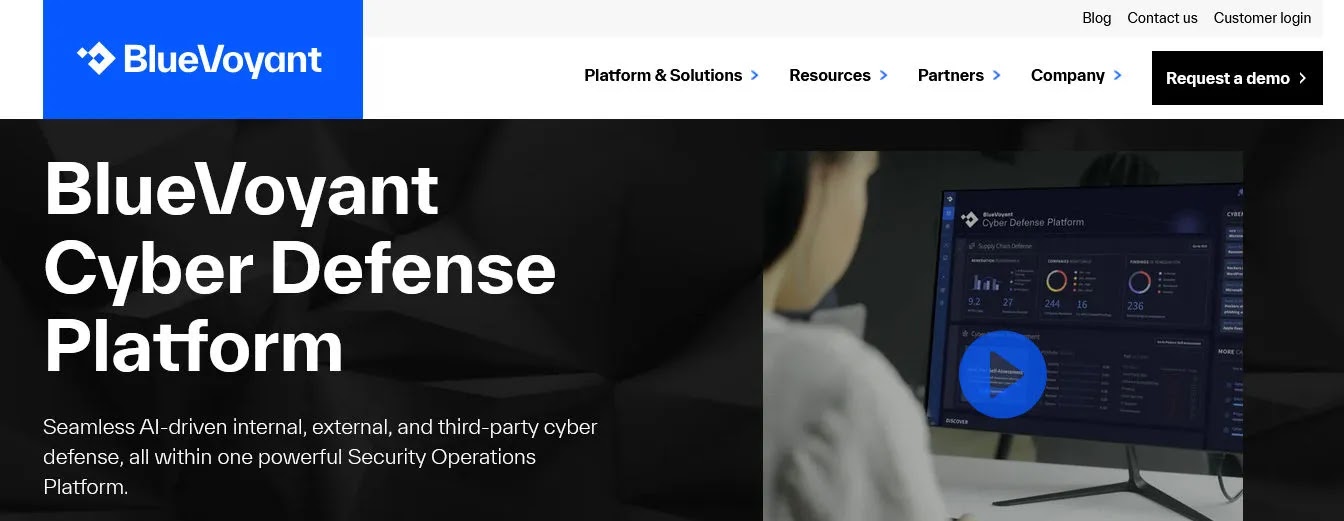
BlueVoyant Sky DRP is gaining global recognition because of its AI-driven risk intelligence along with continuous protection against external threats.
We selected BlueVoyant because of its unique combination of threat detection and managed services. This ensures that even organizations without major internal SOC teams can still benefit from high-level risk protection.
In 2026, outsourcing cybersecurity expertise while maintaining robust DRP solutions has become a trend, and BlueVoyant stands solidly in this niche.
The tool’s powerful network of analysts provides real-time advisories while making digital threat insights actionable. Moreover, BlueVoyant’s reputation for customer-centric service resonates strongly with enterprises that value consultative partnerships.
Specifications
The BlueVoyant Sky DRP platform delivers advanced protection covering phishing attempts, dark web monitoring, and fraudulent activities impacting client organizations.
It combines AI-powered intelligence with human-led investigations to deliver effective action. Its infrastructure gives real-time threat alerting with dashboard customization to align with enterprise reporting requirements.
Features
The features include domain takedowns, data breach discovery, threat intelligence enrichment, continuous digital footprint monitoring, and social media threat identification.
Added support from cybersecurity experts makes remediation faster and smoother for businesses.
Reason to Buy
If your organization prefers a solution combining cutting-edge technology with human expertise, BlueVoyant is an excellent choice.
It delivers faster response and ensures skilled guidance during threat detection incidents.
Pros
- Real-time global threat database
- 24/7 managed support model
- AI-driven intelligence with quick alerts
- Strong customer service standards
Cons
- Higher dependency on external managed support
- Pricing may be premium for SMBs
✅ Best For: Enterprises seeking a blend of AI-powered DRP capabilities and managed response services.
🔗 Try BlueVoyant Sky DRP here → BlueVoyant Sky DRP Official WebsiteConclusion
Your DRP choice in 2026 hinges on exposure profile, priorities, and existing security stack.
Leading solutions shine in specialized areas- Deep intelligence: Digital Shadows, Phishing takedowns: Proofpoint, Social media defense: ZeroFox, Anti-phishing focus: PhishLabs
Evaluate features, specs, and cost-value ratios to proactively shield brand, customers, and reputation from escalating cyber threats.